

5. Case study: Assessment of Biodiversity Conservation Potential of ISFM in Northern Ghana

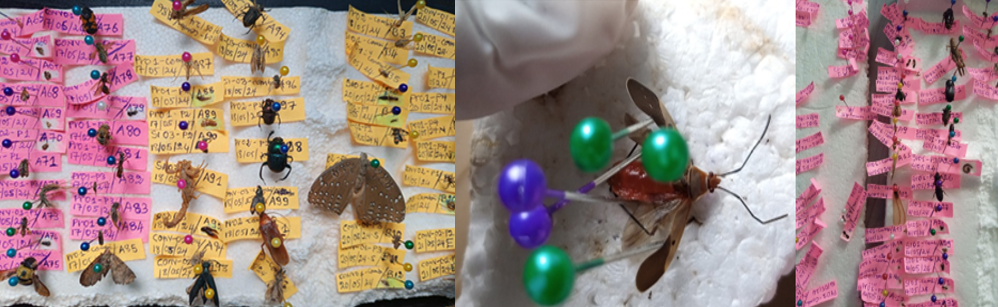
Standardized field protocols were applied across all sampling sites to ensure consistency and minimize observer bias. Pitfall traps and COMBI traps, as described in Sections 3.4.1, were constructed, installed, and operated using identical specifications, including uniform trap design (Figure 9), standardized spacing, and fixed check intervals across all land-use systems. Traps were deployed for equal sampling durations of 72 hours to ensure comparable sampling effort among sites. Collected yields were handled following standardized procedures, with individuals preserved in ethanol and pinned to maintain morphological integrity. The yields were then sorted using consistent morphospecies identification criteria, based on observable morphological characteristics, to ensure repeatability across samples and observers. All field procedures were documented in SOPs to maintain methodological transparency and reproducibility
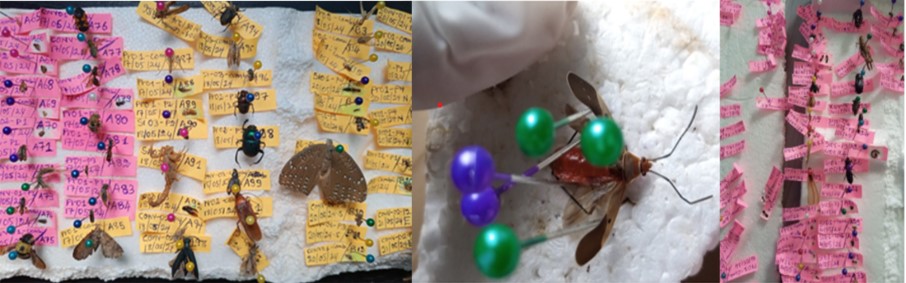
Pinned arthropods for sorting and counting.