

5. Case study: Assessment of Biodiversity Conservation Potential of ISFM in Northern Ghana

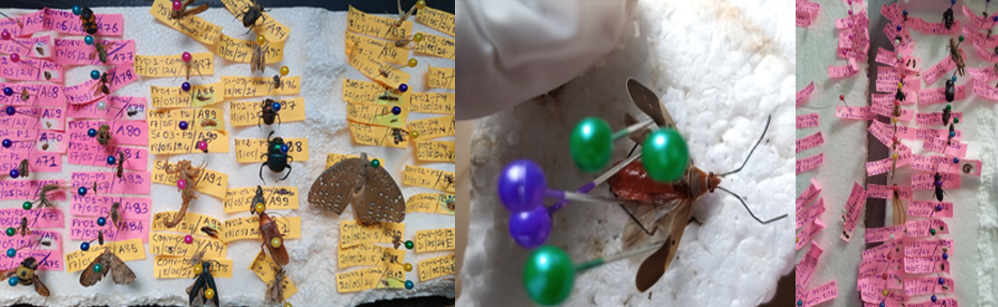
Sampling was designed using a stratified approach across ISFM and conventional agriculture, which acted as proxies for major environmental gradients affecting biodiversity, and were compared with relatively undisturbed reference areas. Within each land-use category, including the relatively undisturbed reference areas, spatial replication was ensured by sampling three (3) independent sites, with identical sampling effort and standardized placement of traps applied across all sites to minimize methodological bias and reduce sampling variance.
Sampling was conducted four (4) times within a full-year period—during fallow, sowing, mid-season, and harvest—to allow comparison among land-use systems. This design recognizes that arthropod communities exhibit seasonal variation and therefore emphasizes the importance of temporal replication for capturing temporal dynamics and improving the robustness of biodiversity assessment.
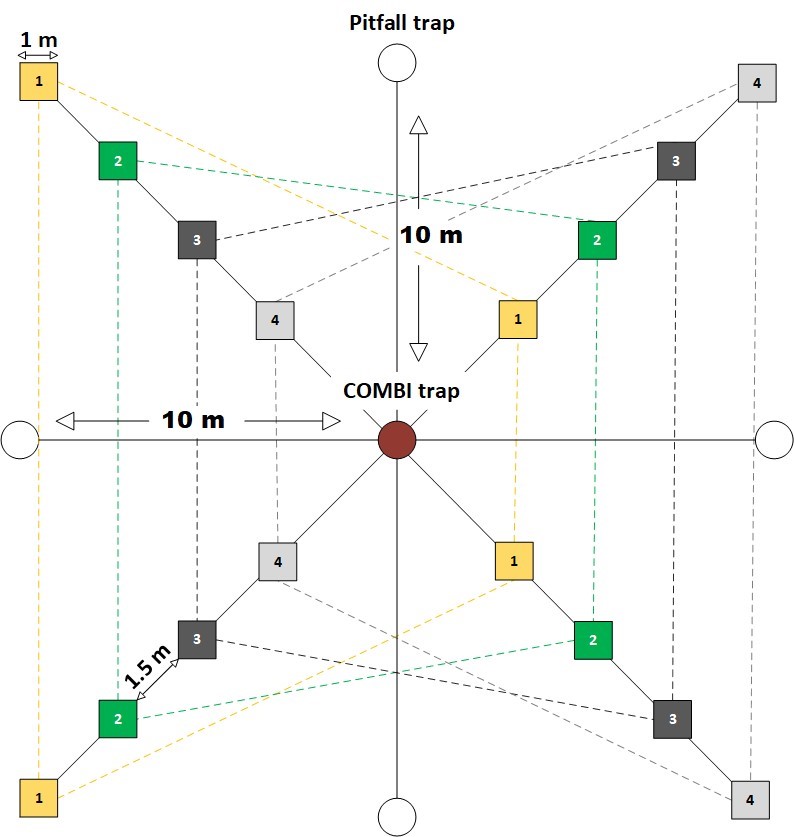
Layout of experimental design.