


Lesson Progress
0% Complete
The following presents a practical workflow for rapid land use-based biodiversity assessments.
- Objectives and scope: Define clear objectives (e.g., status, trend, and conservation potential) based on the aim of the study or project.
- Selection of surrogates: Select the driver-, species-, and taxonomic-surrogates based on the objectives of the study and literature review.
- Indicator selection: Select a small set of robust indicators (e.g., Hill numbers and mean species abundance). Hill numbers are recommended because they convert entropy values which are simple probabilities into effective species numbers.
- Sampling design and stratification: Stratify sampling by land-use types and key environmental gradients; ensure spatial replication and temporal repeats (seasonality) to estimate trends and reduce sampling variance.
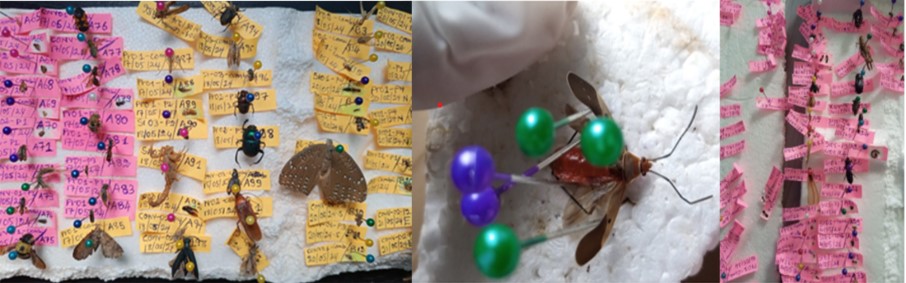
- Standardized field protocols: Use standardized trap construction, spacing, check intervals, specimen handling (pinning, ethanol), and species/morphospecies sorting rules to minimize observer bias. Add documented Standard Operating Procedures (SOPs) for any new methods used.
- Data management and FAIR principles: Store raw and processed data with complete metadata (sampling date, GPS, trap type, effort) in interoperable formats and share using FAIR (Findable, Accessible, Interoperable, Reusable) principles so data can be reused and aggregated.
- Quality assurance and training: Include field training, cross-sorting / blind checks for morphospecies concordance, and periodic calibration of instruments (camera settings, acoustic sensors). Document all deviations.
- Analysis and reporting: Compute Hill diversity profiles and other indices, visualize differences across land-use, estimate conservation potential (e.g., maximum diversity profile and area under curve), and report results with uncertainty and clear policy implications.